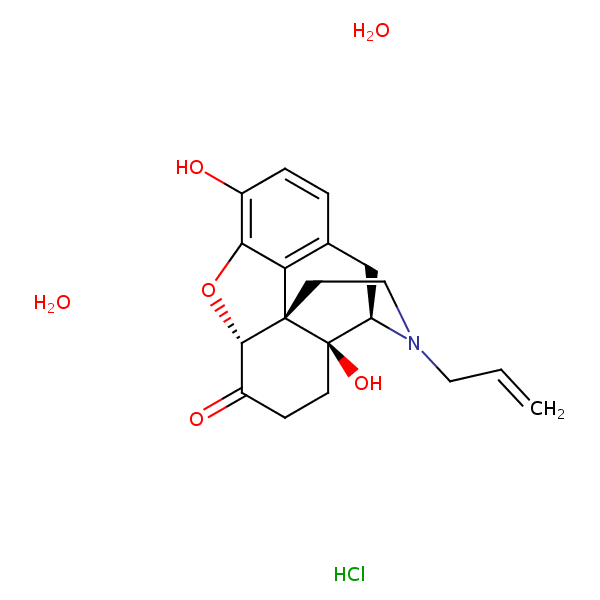
| CAS Number | 51481-60-8 |
|---|---|
| Molecular Formula | C19H26ClNO6 |
| Molecular Weight | 399.870 |
| InChI Key | TXMZWEASFRBVKY-IOQDSZRYSA-N |
| LogP | 1.41 |
| Synonyms |
|
Applications:
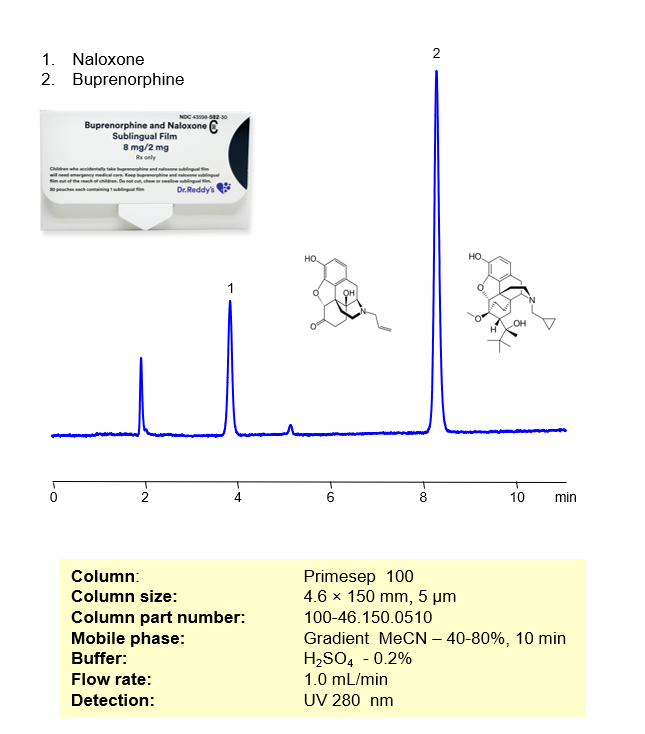
HPLC Method for Analysis of Buprenorphine and Naloxone in Sublingual Film 8mg/2 mg on Primesep 100 Column
December 9, 2022
High Performance Liquid Chromatography (HPLC) Method for Analysis of Buprenorphine, Buprenorphine hydrochloride, Naloxone, Naloxone chlorhydrate on Primesep 100 by SIELC Technologies
Naloxone and buprenorphine are both medications with distinct pharmacological profiles, but they are often used together in the treatment of opioid dependence.
Naloxone:
It is primarily used to reverse opioid overdoses. When administered during an overdose, naloxone can quickly restore normal respiration by binding to opioid receptors and preventing opioids from activating them.
Buprenorphine:
Buprenorphine is used for pain management and as a treatment for opioid dependence. As a partial agonist, it can activate opioid receptors but not to the same extent as full agonists like morphine. This property allows buprenorphine to reduce cravings and withdrawal symptoms in individuals with opioid dependence without producing the same intense “high” or dangerous side effects as other opioids.
Combination in Treatment:
Buprenorphine and naloxone are combined in products like Suboxone. The purpose of this combination is to provide the therapeutic benefits of buprenorphine for opioid dependence while discouraging misuse. If someone tries to dissolve and inject the combination, naloxone will block the effects of buprenorphine and potentially induce withdrawal, thereby acting as a deterrent to this route of misuse. However, when taken sublingually as prescribed, the naloxone component has minimal bioavailability and thus minimal effect, allowing the buprenorphine component to exert its therapeutic action.
Buprenorphine, Buprenorphine hydrochloride, Naloxone, Naloxone chlorhydrate can be separated, retained, and analyzed on a Primesep 100 mixed-mode stationary phase column using an gradient analytical method with a simple mobile phase of water, Acetonitrile (MeCN), and a sulfuric acid (H2SO4) buffer. This analysis method can be detected in the UV regime at 280 nm.
Condition
| Column | Primesep 100, 4.6 x 150 mm, 5 µm, 100 A, dual ended |
| Mobile Phase | Gradient MeCN |
| Buffer | H2SO4 – 0.2% |
| Flow Rate | 1.0 ml/min |
| Detection | UV,280 nm |
| Peak Retention Time | 3.8, 8.2 min |
Description
| Class of Compounds | Drugs |
| Analyzing Compounds | Buprenorphine, Buprenorphine hydrochloride, Naloxone, Naloxone chlorhydrate |
Application Column
Primesep 100
Column Diameter: 4.6 mm
Column Length: 150 mm
Particle Size: 5 µm
Pore Size: 100 A
Column options: dual ended
Buprenorphine hydrochloride
Naloxone
Naloxone chlorhydrate

Separation of Naloxone chlorhydrate on Newcrom R1 HPLC column
May 17, 2018
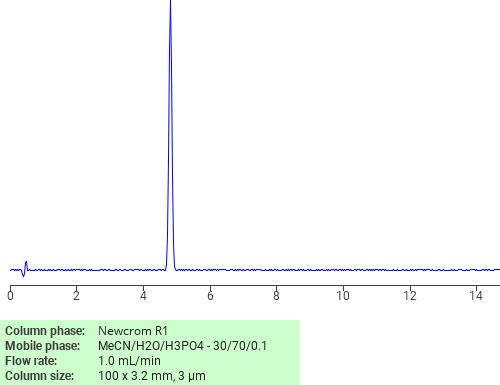
Naloxone chlorhydrate can be analyzed by this reverse phase (RP) HPLC method with simple conditions. The mobile phase contains an acetonitrile (MeCN), water, and phosphoric acid. For Mass-Spec (MS) compatible applications the phosphoric acid needs to be replaced with formic acid. Smaller 3 µm particles columns available for fast UPLC applications. This liquid chromatography method is scalable and can be used for isolation impurities in preparative separation. It also suitable for pharmacokinetics.
Application Column
Newcrom R1
The Newcrom columns are a family of reverse-phase-based columns. Newcrom A, AH, B, and BH are all mixed-mode columns with either positive or negative ion-pairing groups attached to either short (25 Å) or long (100 Å) ligand chains. Newcrom R1 is a special reverse-phase column with low silanol activity.
Select options