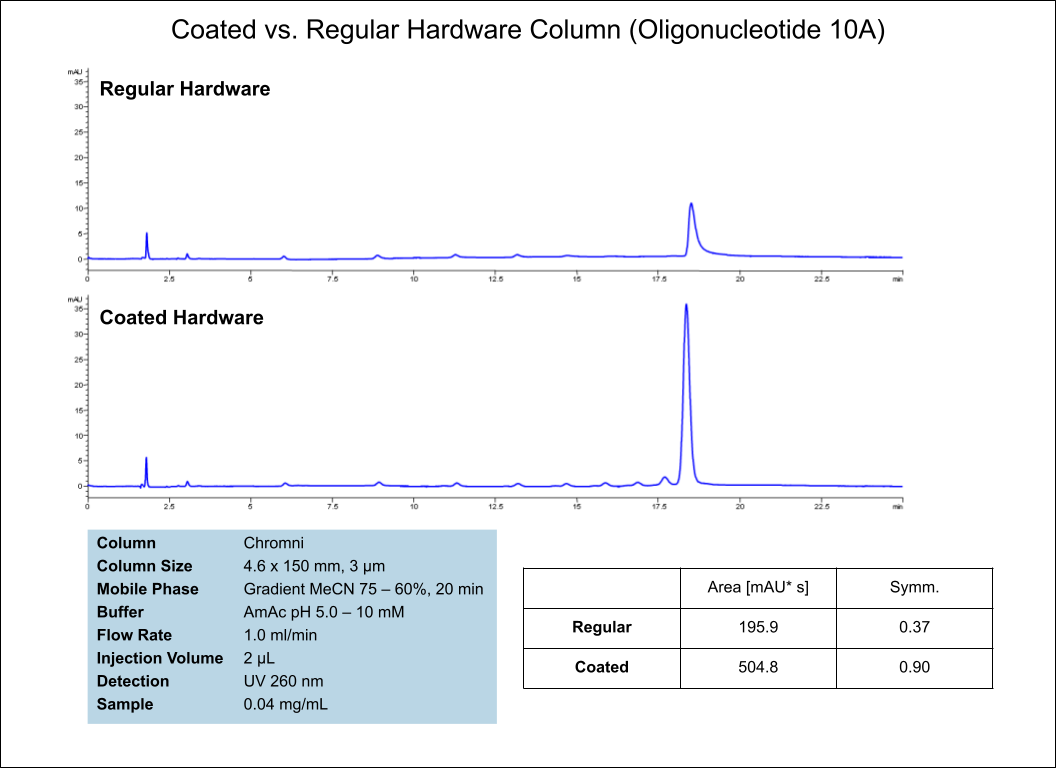
Metal columns typically used in liquid chromatography contain high concentration of transition metals such as Chromium, Iron, Nickel, Molybdenum. These elements while on a surface of the metal can form a complex with different organic molecules with chelating properties. This complex if formed can affect performance of the liquid chromatography separation or completely hide some molecules from reaching the detector especially if a trace amount needs to be analysed.
Coated or inert HPLC columns are specifically designed to minimize interactions between metal components and chelation-prone compounds. Currently available for dual-ended columns, these coatings prevent compounds such as nucleotides, oligonucleotides, and other phosphate-containing molecules from binding to metal surfaces.
The entire internal metal surface of the column is treated with an inert protective layer, shielding analytes from unwanted interactions with the hardware. The inert coating ensures analytes engage only with the stationary phase, reflecting their true chromatographic behavior.
By reducing metal-induced interactions, coated columns enhance chromatographic performance through decreased peak tailing, improved signal response, and greater analytical reproducibility. They are ideal for applications requiring high sensitivity and chemical integrity, including nucleic acid analysis, biopharmaceutical research, and workflows involving phosphate-containing and similarly behaved biomolecules.