High Performance Liquid Chromatography (HPLC) Method for Analysis of 6-Aminocaproic acid on Primesep A by SIELC Technologies.

6-Aminocaproic Acid, sold under the brand name Amicar and also written as 6ACA, is a clotting agent used to control excessive bleeding in patients during or after surgery by acting as an inhibitor to fibrinolysis. It is also used to treat a variety of disorders from Thrombocytopenia to bleeding disorders. It’s chemical formula is C6H13NO2. You can find detailed UV spectra of 6-Aminocaproic Acid and information about its various lambda maxima by visiting the following link.
6-Aminocaproic acid can be retained, separated and analyzed using a Primesep A mixed-mode stationary phase column. The analysis employs an isocratic method with a simple mobile phase comprising water, acetonitrile (MeCN), and perchloric acid as a buffer. This method allows for detection using UV 200 nm.
| Column | Primesep A, 4.6 x 250 mm, 5 µm, 100 A, dual ended |
| Mobile Phase | MeCN – 20% |
| Buffer | HClO4 -0.2% |
| Flow Rate | 1.0 ml/min |
| Detection | UV 200 nm |
| Samples | 1.0 mg/ml in H2O – 100% |
| Injection volume | 10 µl |
| LOD* | 20 ppm (200 nm) |
| Class of Compounds | Acid |
| Analyzing Compounds | 6-Aminocaproic acid |
Application Column
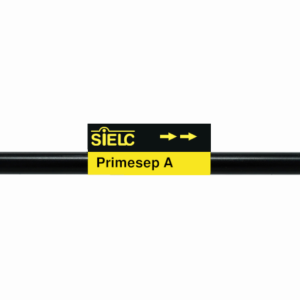
Primesep A
Column Diameter: 4.6 mm
Column Length: 250 mm
Particle Size: 5 µm
Pore Size: 100 A
Column options: dual ended