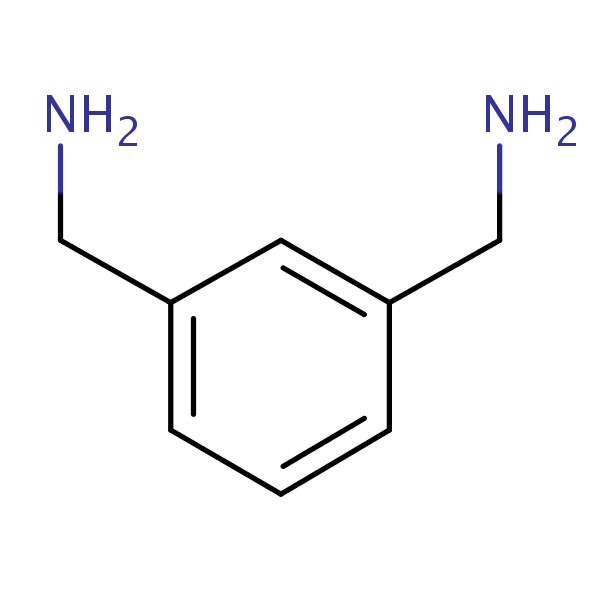
| CAS Number | 1477-55-0 |
|---|---|
| Molecular Formula | C8H12N2 |
| Molecular Weight | 136.198 |
| InChI Key | FDLQZKYLHJJBHD-UHFFFAOYSA-N |
| LogP | 0.196 |
| Synonyms |
|
Applications:
HPLC Method For Analysis of Xylylenediamine on BIST B+ Column
June 15, 2022
HPLC Method for Xylylenediamine, m-Xylylenediamine on BIST B+ by SIELC Technologies
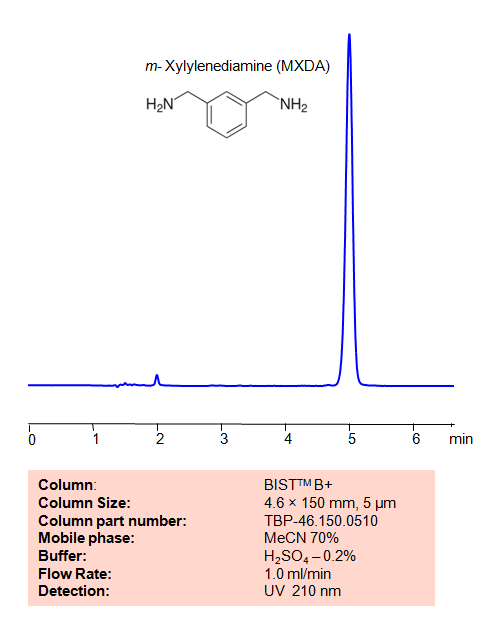
High Performance Liquid Chromatography (HPLC) Method for Analysis of Xylylenediamine, m-Xylylenediamine.
m-Xylylenediamine (MXDA) is a popular curing agent used on epoxy resins with the chemical formula C8H12N2. When MXDA undergoes the Sommelet reaction, it results in a isophthalaldehyde. You can find detailed UV spectra of m-Xylylenediamine and information about its various lambda maxima by visiting the following link.
Using SIELC’s newly introduced BIST method, Xylylenediamine, m-Xylylenediamine, which protonates in water, can be retained on a positively-charged anion-exchange BIST B+ column. There are two keys to this retention method: 1) a multi-charged, negative buffer, such as Sulfuric acid (H2SO4), which acts as a bridge, linking the positively-charged MXDA analytes to the positively-charged column surface and 2) a mobile phase consisting mostly of organic solvent (such as MeCN) to minimize the formation of a solvation layer around the charged analytes. Using this new and unique analysis method, MXDA can be retained and UV detected at 210 nm.
| Column | BIST B+, 4.6 x 150 mm, 5 µm, 100 A, dual ended |
| Mobile Phase | MeCN/H2O – 70/30% |
| Buffer | H2SO4 – 0.2 % |
| Flow Rate | 1.0 ml/min |
| Detection | UV, 210 nm |
| Class of Compounds |
Drug, Basic, Hydrophobic, Ionizable, Zwitterionic |
| Analyzing Compounds | Xylylenediamine, m-Xylylenediamine |
Application Column
BIST B+
Column Diameter: 4.6 mm
Column Length: 150 mm
Particle Size: 5 µm
Pore Size: 100 A
Column options: dual ended
m-Xylylenediamine

Analysis of m-Xylylenediamine (MXDA)
February 15, 2012
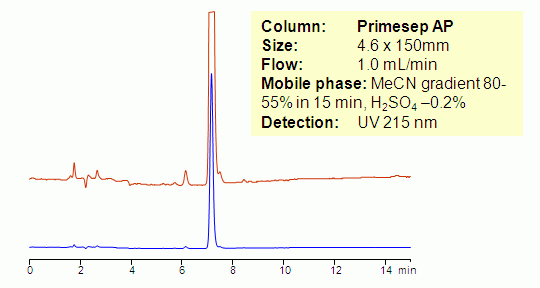
| Column | Primesep AP, 4.6×150 mm, 5 µm, 100A |
| Mobile Phase | MeCN/H2O |
| Buffer | H2SO4 – 0.2 % |
| Flow Rate | 1.0 ml/min |
| Detection | UV, 215 nm |
| Class of Compounds |
Drug, Basic, Hydrophobic, Ionizable, Zwitterionic |
| Analyzing Compounds | m-Xylylenediamine (MXDA) |
Application Column
Primesep AP
The Primesep family of mixed-mode columns offers a wide variety of stationary phases, boasting unprecedented selectivity in the separation of a broad array of chemical compounds across multiple applications. Corresponding Primesep guard columns, available with all stationary phases, do not require holders. SIELC provides a method development service available to all customers. Inquire about our specially-tailored custom LC-phases for specific separations.
Select optionsXylylenediamine
m-Xylylenediamine
