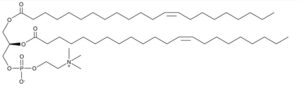
| Molecular Formula | C52H100NO8P |
|---|---|
| Molecular Weight | 898.3 |
| InChI Key | SDEURMLKLAEUAY-JFSPZUDSSA-N |
| LogP | 18.1 |
| Synonyms |
|
Applications:
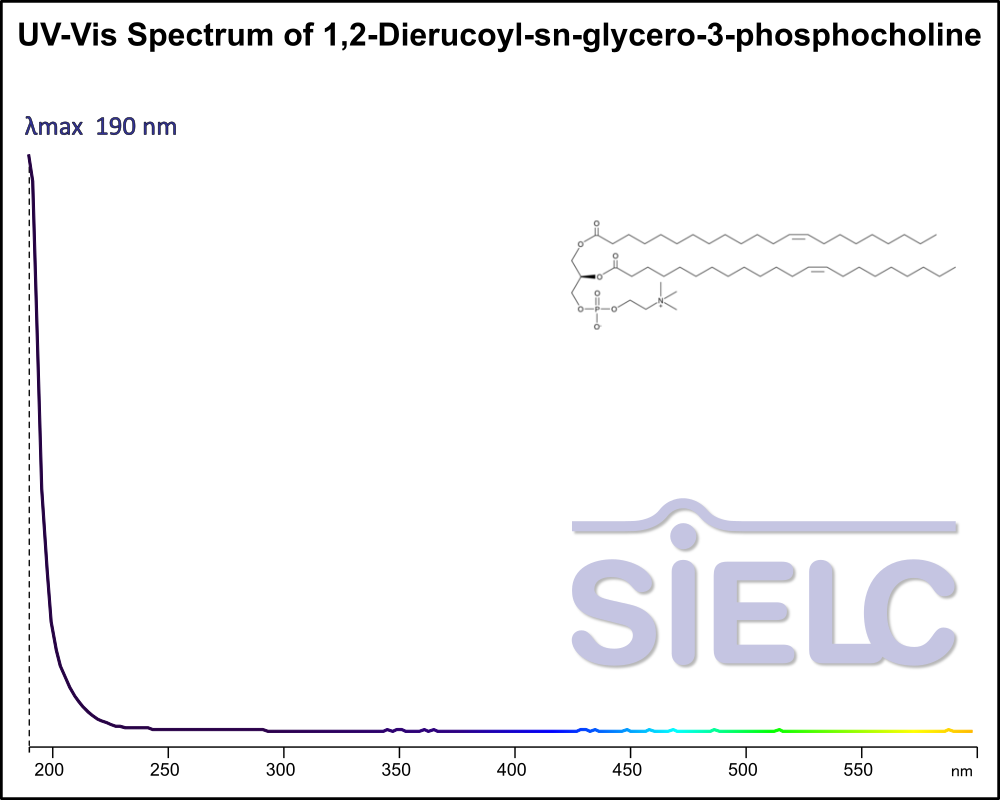
Uv-Vis Spectrum of DEPC
March 30, 2026
Access the UV-Vis Spectrum SIELC Library
If you are looking for optimized HPLC method to analyze DEPC check our HPLC Applications library
For optimal results in HPLC analysis, it is recommended to measure absorbance at a wavelength that matches the absorption maximum of the compound(s) being analyzed. The UV spectrum shown can assist in selecting an appropriate wavelength for your analysis. Please note that certain mobile phases and buffers may block wavelengths below 230 nm, rendering absorbance measurement at these wavelengths ineffective. If detection below 230 nm is required, it is recommended to use acetonitrile and water as low UV-transparent mobile phases, with phosphoric acid and its salts, sulfuric acid, and TFA as buffers.
For some compounds, the UV-Vis Spectrum is affected by the pH of the mobile phase. This analysis was done with the mobile phase made of 20% acetonitrile and 80% water.

ELSD-HPLC Method for Analysis of Phospholipids on Lipak Colulm
November 22, 2024
ELSD-HPLC Method for Phospholipids on Lipak by SIELC Technologies
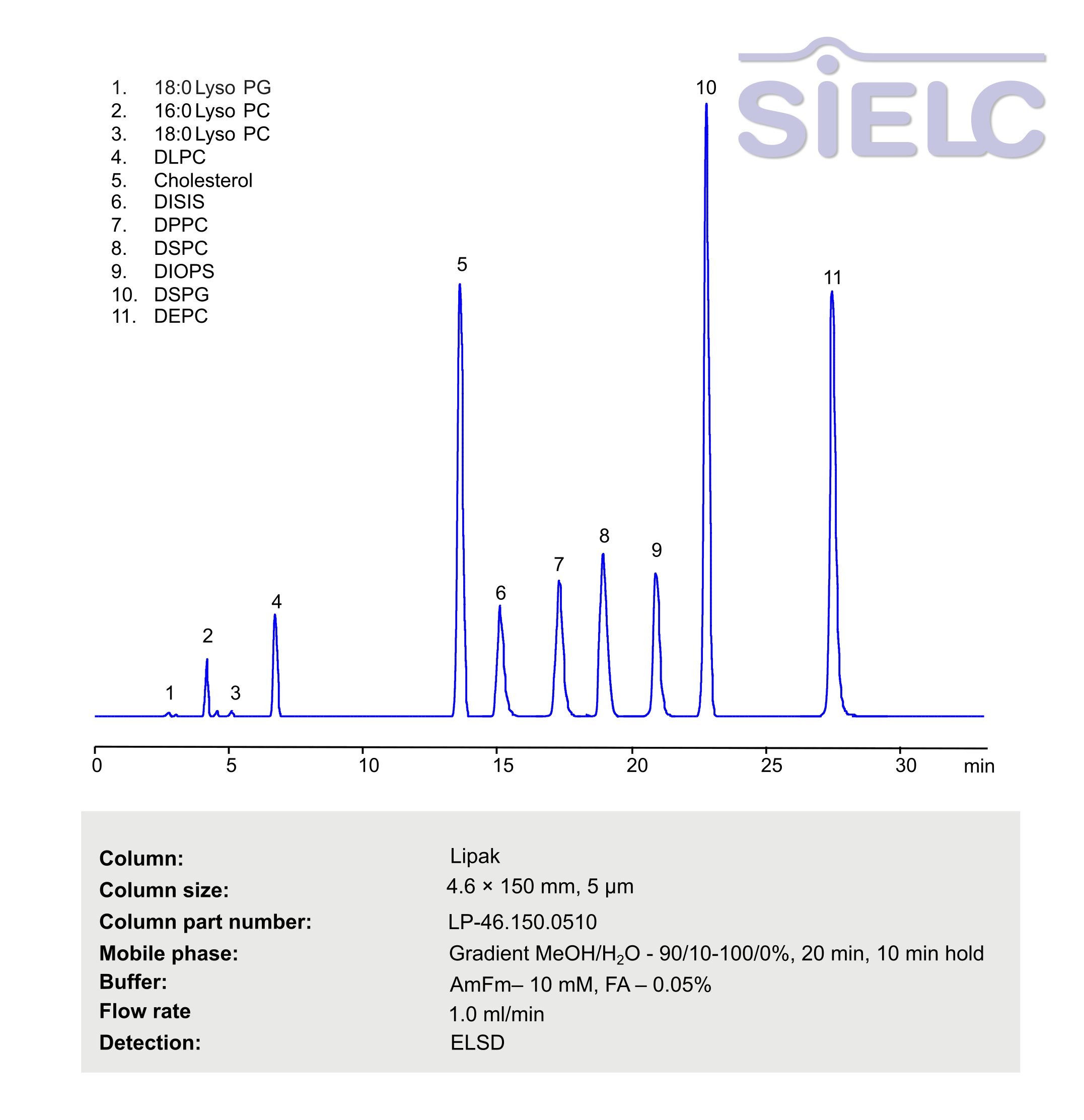
High Performance Liquid Chromatography (HPLC) Method for Analysis of DEPC, DSPG
Phospholipids are vital components of cell membranes, playing key roles in cell signaling, energy storage, and protective functions. They are essential for maintaining cellular structure and function, making them crucial in biological processes and industrial applications such as drug delivery and cosmetic formulations.
Over time, phospholipids can degrade into various biologically active products, including lysophospholipids and fatty acids, which are involved in cellular signaling and inflammation. Monitoring both phospholipids and their degradation products provides valuable insights into metabolic health, lipid metabolism, and the stability of lipid-based formulations.
Our high-resolution chromatograms ensure accurate and reliable analysis of both phospholipids and their degradation products, supporting applications in clinical diagnostics, pharmaceuticals, and food quality control.
Phospholipids can be retained, and analyzed using a Lipak mixed-mode stationary phase column. The analysis utilizes an gradient method with a mobile phase consisting of water, methanol (MeOH), ammonium formate and formic acid as a buffer. Detection is achieved using ELSD
| Column | Lipak, 4.6 x 150 mm, 5 µm, 100 A, dual ended |
| Mobile Phase | Gradient MeOH –90-100% 20 min, 10 min hold |
| Buffer | AmFm– 10 mM, FA – 0.05% |
| Flow Rate | 1.0 ml/min |
| Detection | ELSD, the nebulizer and evaporator temperatures 40°C, with a gas flow rate of 1.6 Standard Liters per Minute (SLM) |
Application Column
Lipak
Column Diameter: 4.6 mm
Column Length: 150 mm
Particle Size: 5 µm
Pore Size: 100 A
Column options: dual ended
DSPG
